Steel reheating furnaces play a critical role in the rolling process. Billets, blooms, and slabs must be heated uniformly and precisely before entering the mill. But reheating is one of the most energy-intensive and dynamic operations in steel production.
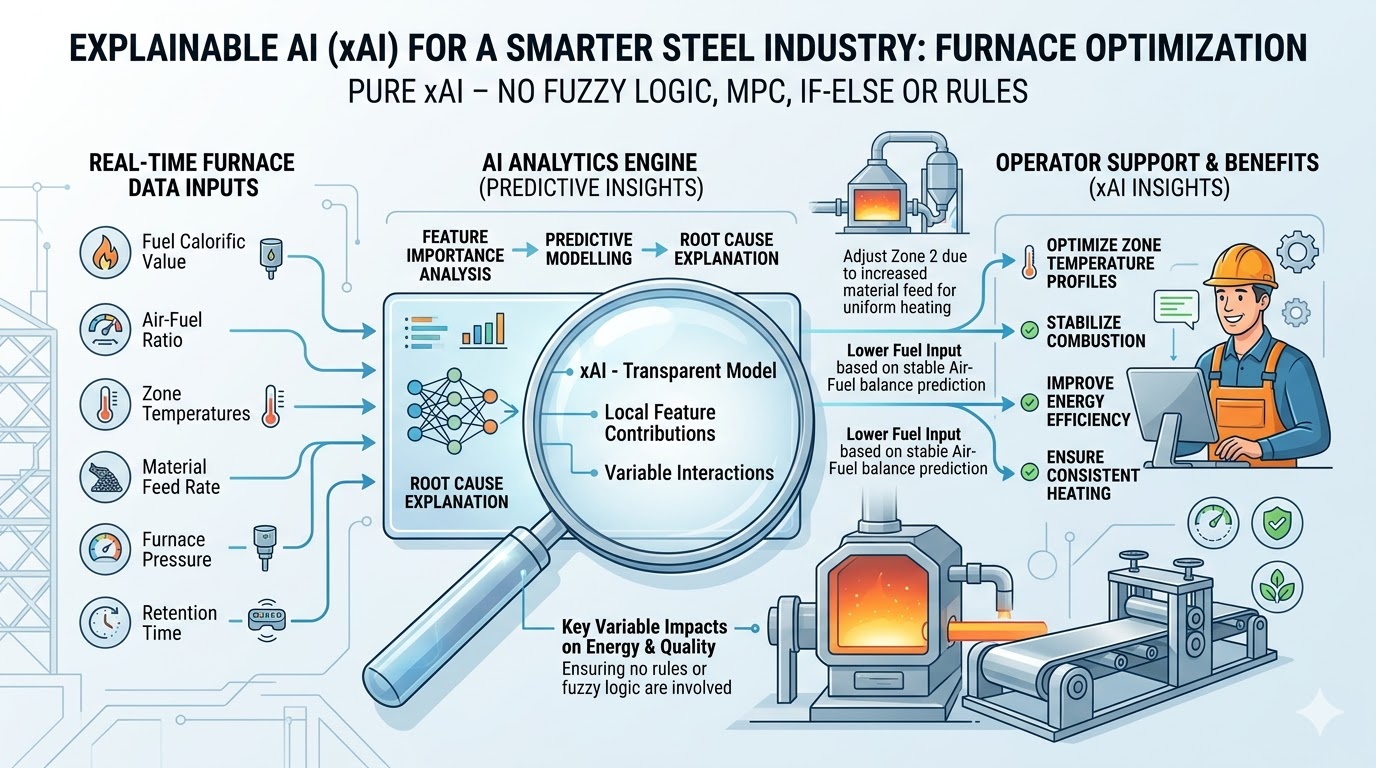
Several factors influence furnace performance simultaneously — fuel calorific value, air–fuel ratio, zone temperatures, material feed rate, furnace pressure, and retention time. Even small variations in fuel quality, material size, or production rates can lead to:
• Uneven heating
• Higher fuel consumption
• Increased scale formation
• Inconsistent product quality
Traditional control systems are designed to manage individual parameters, but they often struggle to handle the complex interactions between these variables in real time.
This is where Industrial AI can make a significant impact.
By analyzing real-time furnace data and learning the relationships between process variables, AI can support operators with predictive insights that help:
- Optimize furnace zone temperature profiles
- Stabilize combustion and air–fuel balance
- Improve energy efficiency
- Ensure consistent material heating
As steel plants focus on efficiency, quality, and emission reduction, AI-driven furnace optimization is becoming an important step toward smarter, more sustainable steel production.
At Arnest, we believe Industrial AI will play a key role in transforming traditional manufacturing operations into intelligent, data-driven processes.