Stop Flying Blind: Why Your Textile Mill Needs a “Target-Driven” Digital Twin
In the world of high-speed textile processing—whether it’s a Continuous Bleaching Range (CBR) or a Stenter’s drying and heat-setting zone—most operators are playing a high-stakes game of Guess the Outcome.
You adjust the chemical dosing or the burner temperature at 10:00 AM, but you won’t see the true result in Shade Consistency or Fabric Hand-feel until thousands of meters have already passed the inspection point. That time-lag is a black hole of wasted dyes, excessive steam, and “second-quality fabric.
At Arnest AI, we think it’s time to stop reacting and start navigating.
The Problem with Passive Twins
Most Digital Twins are just fancy mirrors. They show you what is happening right now. While that’s better than nothing, it doesn’t solve the core problem of textile transitions: Process Inertia and Moisture Lag.
If you want to switch from a light to a dark shade or hit a specific Moisture Regain target, a passive twin just watches you struggle to find the right balance through manual trial and error.
Enter the Arnest “GPS” for Textiles
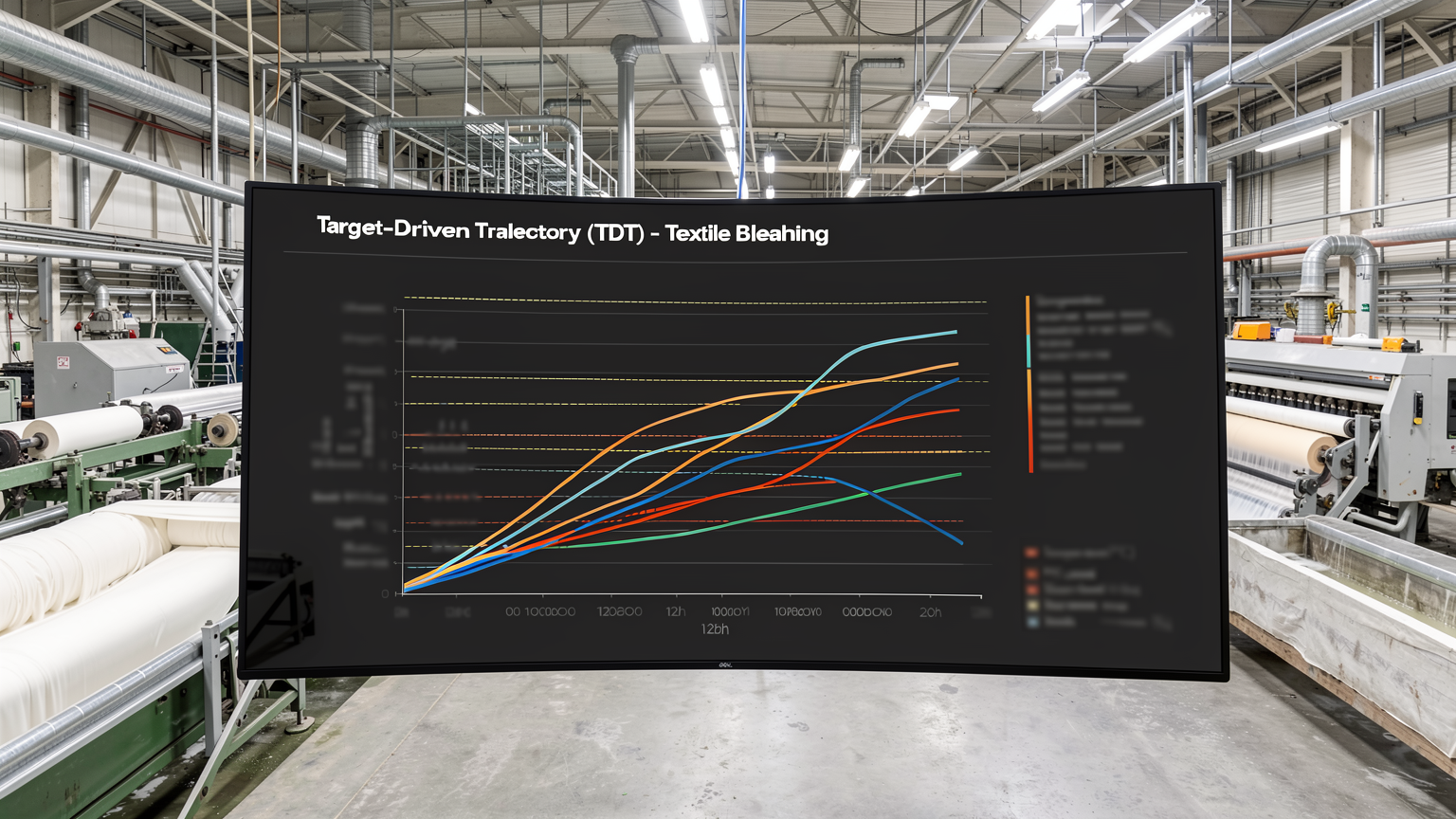
We’ve developed the Target-Driven Trajectory (TDT) Engine. Think of it as the Google Maps for your Processing and Dyeing House.
Instead of just telling you where you are, you tell the Twin where you want to go.
The Input: “I want 180°C heat-setting with < 5% moisture,” or “I want a specific Delta-E color value with 10% less steam.“
The Engine: Our AI analyzes the real-time DNA of your process from the Controller
The Output: It calculates the exact Time-to-Target and provides a Parameter Trajectory—a step-by-step flight path for your dosing pumps, blower speeds, and burner setpoints.
Why This Changes Everything
No More Setpoint Hunting: Operators usually hunt for the right balance, overshooting and undershooting for hours during lot changes. Our Twin calculates the fastest stable path to your Golden Run.
Zero Quality Rejects: By predicting the shade and moisture outcome before the fabric exits the range, you eliminate the tail-end defects that eat into your margins.
Steam & Chemical Stewardship: In integrated finishing units, our trajectory prevents chemical over-dosing and steam surges, protecting both your Boiler and your bottom line.
The Bottom Line
Digital transformation shouldn’t just give you more charts to look at; it should give you a clear path to follow. Whether you are managing a processing house or a standalone finishing mill, the goal is the same: reach the target state in the shortest time with the lowest resource cost.