In high-temperature process industries such as cement, minerals, and materials manufacturing, the kiln flame is responsible for delivering the thermal energy that drives critical chemical transformations.
In cement production, for example, the flame must raise material temperatures from ~900°C to 1450°C to enable clinker formation.
But achieving the perfect flame is an engineering balancing act.
Modern burners must simultaneously deliver:
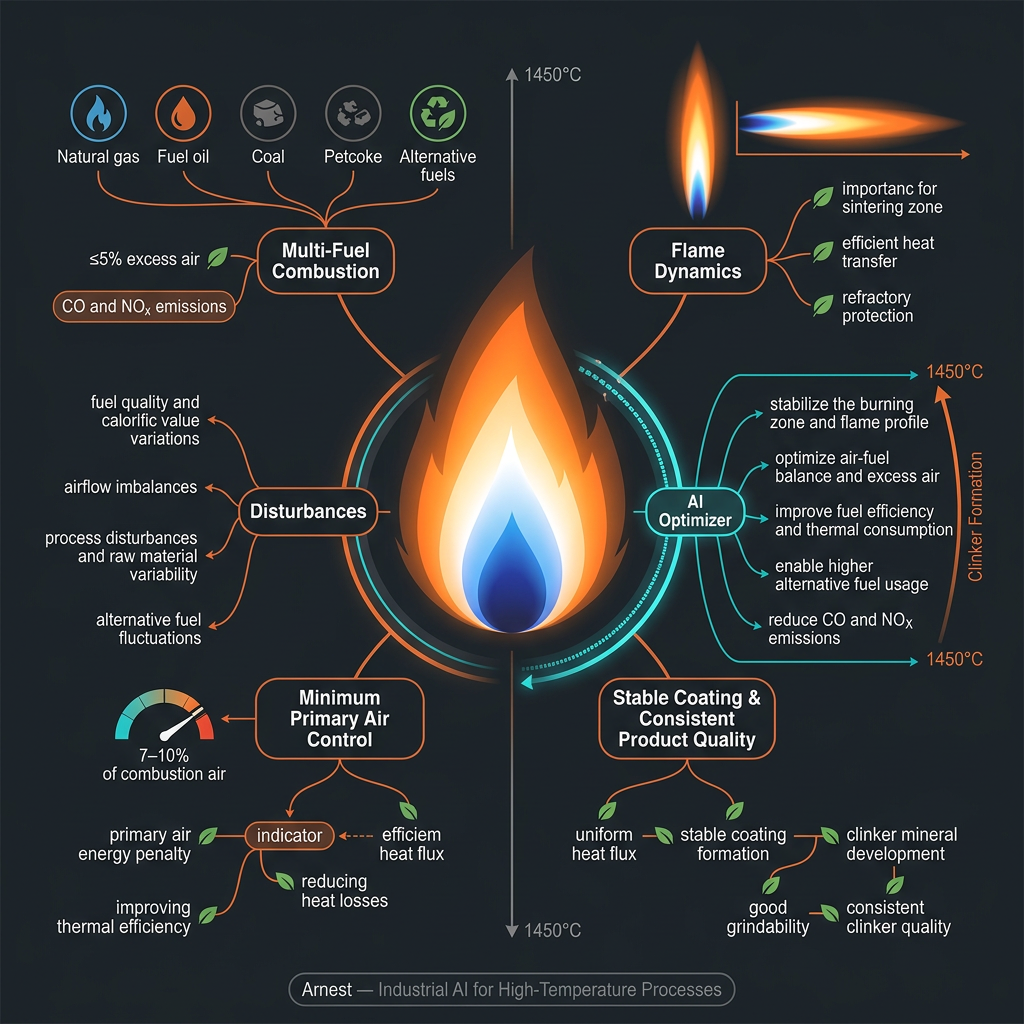
- Multi-Fuel Combustion with Low Emissions:
Today’s kilns burn a mix of natural gas, fuel oil, coal, petcoke, and alternative fuels. Efficient operation requires maintaining very low excess air levels (≤5%) while minimizing CO and NOx emissions. - Precision Flame Dynamics:
A short, narrow, highly radiant flame is essential for efficient heat transfer in the sintering zone. Concentrated thermal profiles accelerate clinker formation and protect kiln refractory. - Stable Coating & Consistent Product Quality:
A stable flame supports uniform heat flux, stable coating formation, and proper mineral development—critical for consistent clinker quality and good grindability. - Minimum Primary Air:
Primary air acts as a hidden energy penalty. Optimized systems keep it within 7–10% of combustion air, reducing heat losses and improving thermal efficiency.
In real plant operations, however, combustion conditions constantly change due to:
- Fuel quality and calorific value variations
- Alternative fuel fluctuations
- Airflow imbalances
- Process disturbances and raw material variability
This is where AI-driven combustion optimization can transform kiln performance.
By continuously analyzing real-time process data, AI-based optimizers can:
- Stabilize the burning zone and flame profile
- Optimize air-fuel balance and excess air
- Improve fuel efficiency and thermal consumption
- Enable higher alternative fuel usage
- Reduce CO and NOx emissions
Instead of reacting to disturbances after they occur, AI allows plants to predict, adapt, and maintain optimal combustion conditions in real time.
At Arnest, we focus on applying Industrial AI optimization to complex high-temperature processes, helping industries achieve stable operations, lower energy consumption, and consistent product quality